SaaS demand generation helps a buyer recognize a problem before they are ready to compare vendors, then gives them enough useful evidence to carry that problem through a messy internal decision. A content calendar can support that work, but it can’t replace it.
That sounds obvious until you look at how most teams work. They publish an article, buy the click closest to a demo, and treat the form fill as the whole story. Meanwhile, the buyer has been piecing together a view from a founder’s opinion, a colleague’s warning, a search result, a review site, and whatever an AI answer showed first. Buyers follow their own route through that material because they’re trying to reduce the risk of being wrong in public.
SaaS demand generation has to earn a place in the buying conversation
A useful demand program gives a buyer something they can use before they need your product. It might name an expensive operational problem precisely. It might show the trade-off hidden behind a popular fix. It might give the internal champion language for explaining why the status quo is costing more than it appears to cost.
That’s a different job from lead capture. A form collects interest that already exists. Paid search can meet a buyer who has already named a category. Both matter. Neither creates the base preference on its own.
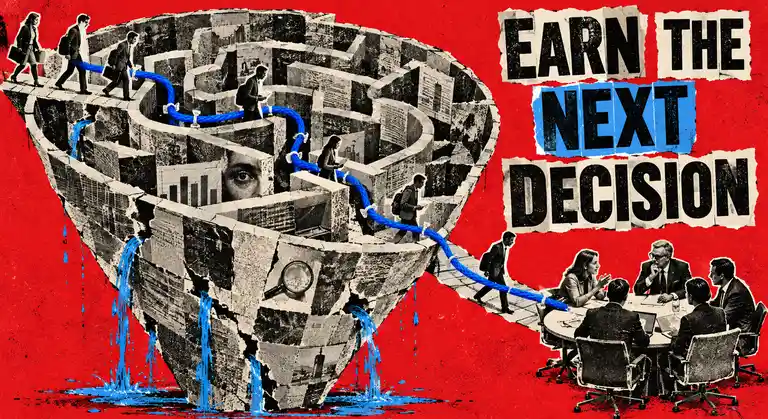
Gartner’s description of the B2B buying journey is useful here because it treats buying as a set of jobs, including problem identification, solution exploration, requirements building, supplier selection, validation, and consensus creation. Those jobs do not line up politely. A buyer can move from a comparison page back to problem definition because a security reviewer or finance lead raised a question nobody had answered yet. Gartner’s B2B buying-journey research is worth reading for the underlying model.
The content system should follow that reality. A founder clip can help someone recognize the problem. A clear article can help them describe it. A comparison page can help them sort options. Setup material can help them decide whether the team can live with the choice. When those pieces all repeat the same empty promise, the system breaks. When they each answer the next honest question, the buyer has a reason to keep going.
Give every channel a buying job
Channels aren’t interchangeable distribution buckets. Search is strong when somebody has enough language for the problem to ask a specific question. A founder-led video can make a difficult or skeptical category legible before the buyer has that language. A review environment can help when the buyer needs validation they won’t accept from the vendor. Retargeting has a smaller, less glamorous job: bring people back with the next useful answer instead of another demand for a demo.
A view isn’t a prospect, and a job title isn’t intent. Google says its ad products use intent signals across its surfaces. That makes problem-led targeting a sounder start than treating a broad work audience as if it were already shopping. Google’s explanation of Ads capabilities is the source for that platform claim. For the nuts and bolts of testing short-form video against problem research, see our guide to YouTube ads for Shorts.
The question is not whether video, LinkedIn, SEO, or paid search wins. The question is whether this asset helps this person do the next piece of decision work. That constraint prevents a lot of expensive activity from dressing itself up as a strategy.
Founder-led work is useful when it contains judgment
Most B2B content is too careful to stick. It repeats best practices, calls every tactic important, and never tells the reader what to distrust. Buyers don’t need another vendor explaining that growth is hard. They need to see how somebody thinks when a familiar playbook stops working.
That is why founder-led work can matter. A founder can explain the trade-off, the failure mode, and the question a buyer should ask before they spend. The 2024 Edelman-LinkedIn B2B Thought Leadership Impact Report examines how decision-makers use thought leadership while assessing companies. It doesn’t turn every founder monologue into evidence. It does support the simpler point: judgment is part of how buyers evaluate unfamiliar suppliers.
One monthly talk can produce several useful pieces if the argument survives the change in shape. Pull out the sharpest claim for a short video. Let the longer article do the reasoning the clip can’t hold. Send the next piece to people who need that answer. Don’t turn one interview into a month of interchangeable fragments. The work is in choosing what deserves to travel.
Measure the decision, not the platform’s mood
Last-click attribution answers a narrow question: what happened right before the conversion? It can’t tell you whether an earlier exposure gave the buyer language, familiarity, or support inside the team. Impression counts fail in the other direction. They show that something was served, not that anything changed.
Start with the signal closest to the work, then move out. A video needs real viewing behavior. A problem-led article should create deeper visits or the next good question. A comparison page should help a buyer judge fit. The business test is whether qualified talks and pipeline quality improve against a known baseline. If the evidence doesn’t clear the gate you set in advance, don’t treat the channel like a moral obligation.
You don’t need a perfect credit story to make a better call. You need a stated hunch, a set time window, and a willingness to say that the message didn’t earn more budget. Our minimum viable sprint approach is built around that discipline.
Build the evidence trail buyers will check
AI-mediated research makes consistency more important. A buyer may first encounter a claim in an assistant, then look for evidence on your site, then check a review or ask somebody they trust. That sequence demands a sturdier underlying argument across every place the buyer can verify it.
For the SEO side of that job, our piece on the zero-click content strategy B2B marketers are missing lays out why ranking and earning trust are now linked but not identical.
Build fewer arguments that can survive scrutiny. Give each channel a real job. Then let the buyer decide whether your thinking belongs in the conversation they are already having.