
YouTube Shorts is worth doing when it gives your buyer another chance to recognize you. It won’t pay off as a tiny video factory with no destination.
That distinction gets lost because Shorts makes attention look clean. A number goes up, a comment lands, and somebody says the clip did well. Fine. If the work doesn’t help somebody understand what you sell, remember your name, or take the next useful step, you’ve made a little television show for the feed, and the feed doesn’t owe you a sales pipeline.
B2B teams don’t need another one.
Give the clip one job
A short video has room for one thought. You’ve got space to name a problem your buyer already feels, show a small piece of how you work, or make a claim that a longer video, a sales call, or a useful page will unpack later. Trying to fit the whole sales argument into a short clip usually produces a fast, blurry version of nothing, because the viewer can’t hold your product, your proof, and your ask in their head while their thumb is already headed for the next video.
Founder-led clips work because the person with the point of view is there. You don’t need a television voice. You need a sentence you can stand behind, then enough context for a curious person to find the next thing. That is the same reason we build founder-led marketing around repeated useful ideas instead of a pile of generic brand posts.
Put the longer explanation somewhere it can do its job. A short clip can lead to a page, a deeper video, a newsletter, or a conversation. You’ll get farther when it does that than when it tries to replace them.
Views are a bad stopping point
A view tells you a video began playing. It doesn’t tell you whether the viewer was a buyer, whether they understood the point, or whether they came back. The dashboard is useful, but it isn’t an alibi for skipping judgment.
Watch what happens after a run of clips. Look for visits to the pages you care about, viewing of the longer material, sales conversations using language you’ve been teaching, and prospects who arrive already knowing why they’re talking to you. Those are better signs than a view count sitting alone on a weekly report.
Shorts can also muddy a channel when every format is shoved together without a plan. One line of research has looked at how short and long videos affect the same channel (arXiv). You don’t need to turn that into a universal rule. You do need to watch your own channel instead of assuming that more posting is always better.
Make the path obvious
A clip needs a clear next move. That doesn’t mean barking “book a call” at strangers who watched twelve seconds of you explaining a problem. It means matching the ask to the moment. Someone hearing a new idea may want the longer explanation. Someone already looking for help may be ready for a focused offer.
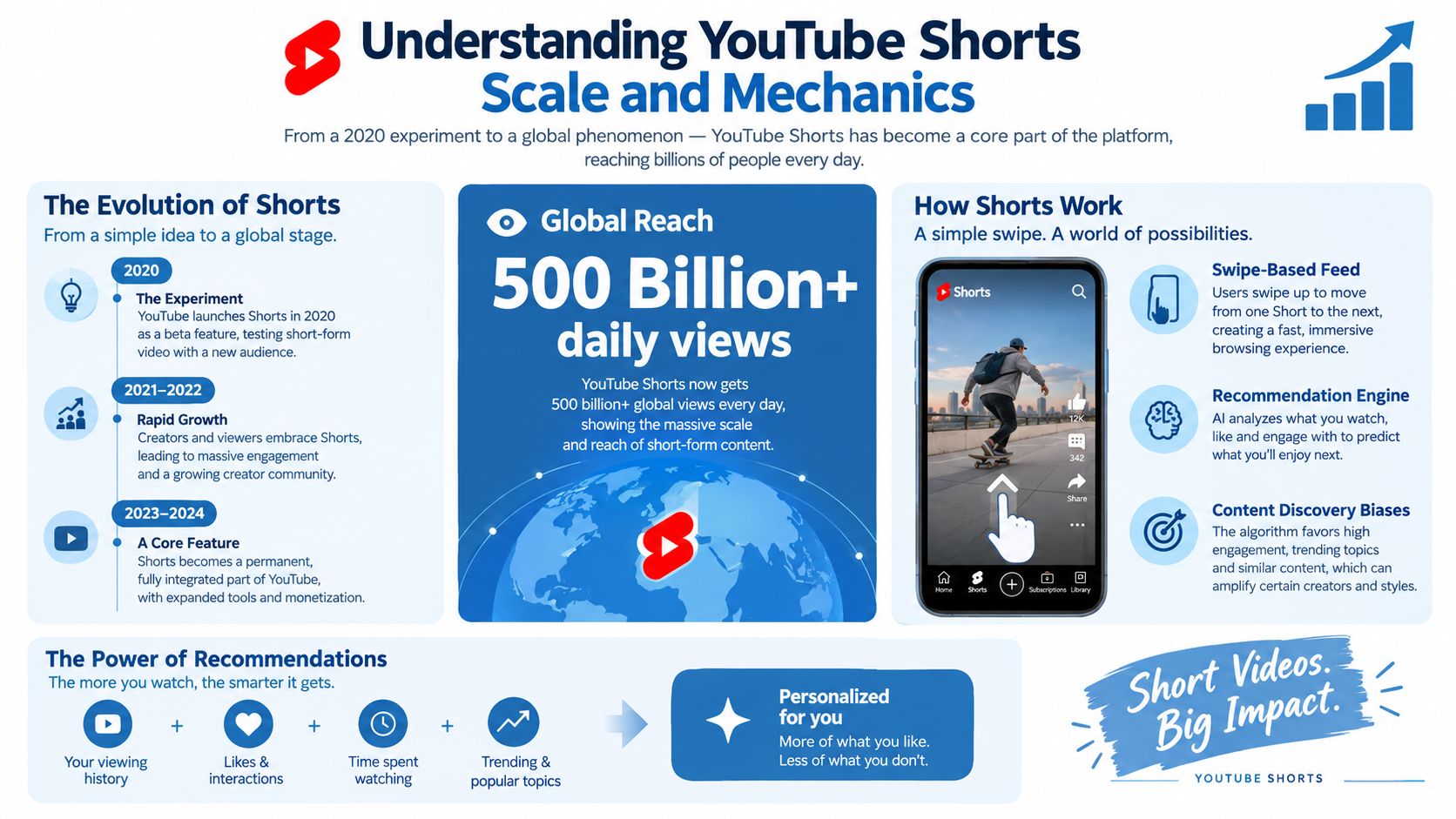
Paid placement can be useful once you know what the clip is for. YouTube ads for Shorts are one way to put a useful explanation in front of people who are already closer to the problem. Organic posting and paid distribution can work together when they’re pointing at the same argument. We wrote about that relationship in Paid Organic Isn’t an Oxymoron, It’s the Only Smart Play in 2026.
The production side matters too, but it shouldn’t outrun the idea. Services such as ImagineVid and Hooked describe ways to turn source material into short clips. Use a tool if it keeps a good founder conversation from dying on a hard drive. Don’t use it to manufacture opinions nobody in the business has.
What a sensible test looks like
Start with a short run around one buyer problem. Pull the clips from a founder interview, a product conversation, or an answer your team gives all the time. Keep the point consistent long enough to learn whether people understand it. Change the opening or the example when the message is unclear, rather than changing the whole thesis every week, because you can’t learn much from a test that keeps changing the question halfway through.
Then look at the downstream behavior with someone who understands the sales cycle. Marketing can see the videos. Sales can hear whether a prospect comes in warmer or more confused. Both views matter. Neither gets to declare victory from a screenshot, because neither one sees the whole path alone and neither one should have to.
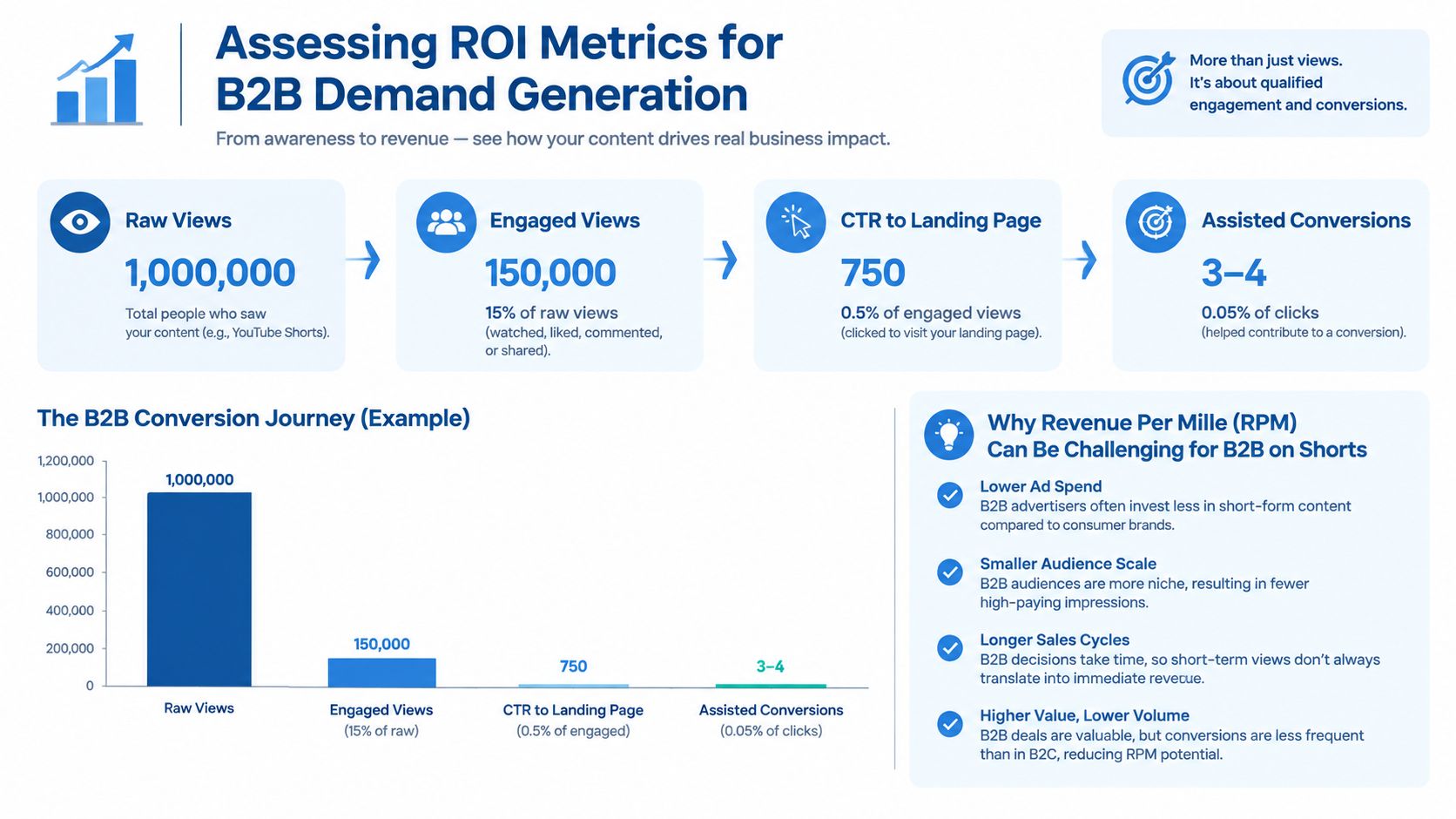
There are plenty of pages offering platform numbers and creator-revenue comparisons, including AllOutSEO, ShortsIntel, AIR, and Kapwing. Those can give you context. They can’t tell you whether a stranger who swiped through your video is becoming a buyer. Your own path from clip to useful attention has to answer that.
Shorts earns its place when it carries a thought
Do the work if you’ve got something to say repeatedly, somebody worth reaching, and a next step that helps them get closer. Skip it if you’re only feeding the machine.
A founder with a clear point of view can show up in a short video without turning into a creator brand. That’s enough. You want the right person to remember the thought when the problem lands on their desk. Then the rest of your work has somewhere to begin.
CrowdTamers helps B2B founders turn useful points of view into content that gives buyers a reason to keep paying attention.