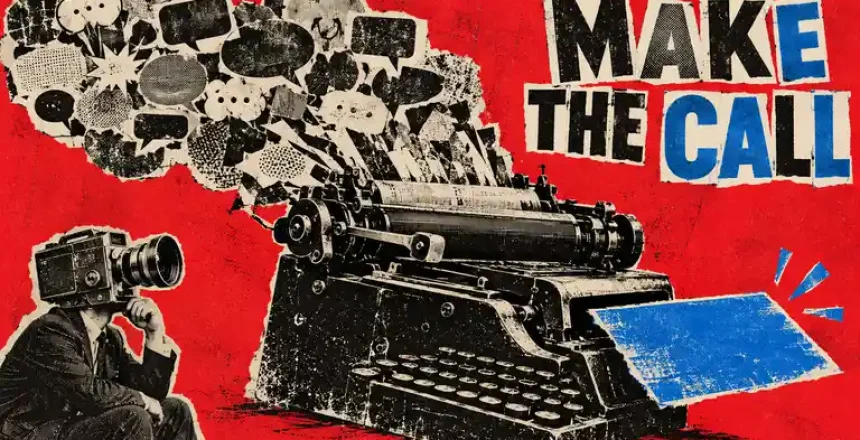
Writing is thinking when it forces you to choose. A founder can talk for an hour and leave everyone with a vague sense of momentum. Put the same idea in a sentence, though, and the gaps show up fast. The buyer, their problem, and the reason to believe all have to show up.
That discomfort is useful because it keeps a founder from mistaking fluent conversation for a position, then discovering in a sales call that nobody can repeat back what the company stands for.
A good draft makes you decide what you mean before your market has to. It also leaves a record you can test against sales calls, customer emails, and the next thing your team learns. That’s why writing belongs upstream of content production. It’s a decision surface.
Writing is thinking because the page won’t fill in the blanks
Conversation has a way of rescuing weak ideas. You can see when someone is confused, add a story, change the subject, or say, “you know what I mean.” A reader can’t help you out like that.
Consider the line, “We help companies grow faster.” It sounds harmless in a meeting. On a page, it immediately creates work. Which companies? Grow through what? What are they doing now that is expensive, slow, or failing? A useful positioning line doesn’t need to answer every question, but it has to make a claim that a buyer can recognize or reject.
That’s the part founders often avoid. They keep adding adjectives because the sentence still has no judgment in it. The better move is to cut until the judgment is visible.
Writing by hand offers a related clue. A Science News report on letter learning describes stronger recognition outcomes for learners who formed letters by hand than for peers who typed or only looked at them. You don’t need a notebook to get the point: producing words can make an idea harder to glide past.
The founder interview is raw material, not finished content
A monthly founder interview is one of the better ways to get to that friction without staring at an empty document. Ask what buyers misunderstand, where the team has changed its mind, and what promise the company refuses to make. Ask for the moment a deal went sideways. Ask what the founder would tell a prospect before they spend another quarter on the wrong approach. You’re looking for something they can defend, not a tidy quote.
Then write from the transcript.
The transcript gives an editor something concrete to work with: the founder’s language, their objections, and the examples they reach for when they’re not trying to sound polished. It can become a founder content strategy, but only after somebody decides which claim is worth carrying forward.
One interview can produce a few different jobs:
- A positioning line that sales can test in calls.
- A short post built around one belief the market gets wrong.
- A clip with enough context that it does not become a slogan.
- A follow-up question for the next interview, when a buyer pushes back.
Those jobs carry the same formed thought into places where people meet it differently. The transcript is the source, the post makes the argument, and the clip lets people hear the person standing behind it. If that link between formats disappears, you’re just making more things.
Don’t confuse output with a point of view
Plenty of teams publish on schedule and still sound interchangeable. The calendar gets filled, the social copy gets approved, and nobody can say what the company believes that a buyer hasn’t heard from ten competitors.
More output won’t repair that. It usually makes the problem harder to see, because the team can point to activity and tell itself the work is getting done.
Start with one sentence that creates a little risk, one a buyer can disagree with and a competitor can object to. If nobody could push back, you’ve written a description instead of a position. You don’t have to be provocative for the sake of it, but you do have to stand somewhere.
This is also where editing tools have a limit. They can help sort a transcript, find repeated phrases, or give an editor a rough first pass. They can’t decide which trade-off the founder is willing to defend. That choice has to come from the person who’ll own it when a customer asks the obvious next question.
If you want a boundary for that work, start with let software do the busywork, not the thinking. It’s easy to generate tidy language. It’s harder to make a call.
Use the draft as a decision test
Before you publish, ask whether the draft names a buyer problem in words that buyer would use, whether it says what changes if they do nothing, and whether the founder would say the same thing in a sales call without hiding behind a slide. If they wouldn’t, the draft isn’t ready.
If the draft survives those questions, make it shorter. Cutting isn’t cosmetic. It tells you what the reader has to carry away, and it shows whether the central thought can survive without its scaffolding.
That is why repurposing should begin after the edit, not before it. Reusing content works when each version preserves the same judgment for a different context. Turning an unformed idea into five formats only gives the confusion more places to travel.
Writing also has a place after something goes wrong. A Frontiers in Human Neuroscience study examined how writing about failure related to later responses to feedback. For a founder, the practical question is simpler: after a loss, can you write down what you now believe, what evidence changed your mind, and what you’ll do next time?
That is enough. The next draft has somewhere to begin.
Writing is thinking when it turns a foggy belief into a decision you are willing to own.