Upper Funnel vs Lower Funnel is a useful distinction, right up until a team starts treating it like a machine.
They buy awareness, wait for people to slide into a demo request, and act surprised when nothing happens. Then the channel gets blamed.
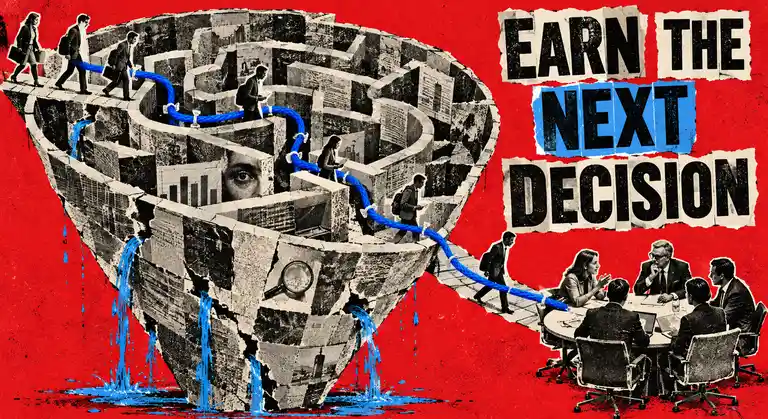
Buyers don’t move that way. They learn about a problem, ignore it for a while, hear the same thing from somebody they trust, compare a few options, get pulled into another priority, and sometimes come back months later. Your job is to give them a reason to take the next step whenever that moment arrives.
| Funnel vocabulary | What the buyer is doing | Common work |
|---|---|---|
| Upper funnel | Learning the category or noticing a problem | Founder content, video, podcasts, paid social |
| Middle funnel | Comparing approaches and vendors | Case studies, retargeting, email nurture |
| Lower funnel | Trying to make a decision | Branded search, pricing pages, demos, sales outreach |
Use the term. Don’t worship the shape.
People search for “upper funnel vs lower funnel” because the phrase gives them a fast way to talk about intent. Keep using it. Just don’t let the picture run your budget.
A physical funnel has one job: everything that enters eventually exits through the bottom. Marketing has nothing like that guarantee. Every handoff asks a buyer for another decision, and a buyer who watches a founder video may never visit the site, while someone who downloads a guide may never take a call and someone who loves the demo may still lose the internal argument.
That’s why “put more into the top” is usually lazy advice. You need to know which decision is failing and what the buyer needs at that point.
If your plan assumes attention will turn into revenue on its own, it isn’t a plan. It’s a hope with a media budget.
I’ve seen teams spend for reach when their landing page makes no clear promise. I’ve seen teams buy every available high-intent click while nobody knows why their offer beats the alternative. Both teams say they have a funnel problem. Usually they have a handoff problem.
For a longer argument about why channel plans need to start with the business, read Throw Away Your Sales Funnel.
What upper funnel and lower funnel mean
Upper funnel work creates familiarity before a buyer is actively shopping. It helps people name a problem, see a different way to solve it, or remember your company when the timing changes. That can include founder writing, podcast appearances, short video, events, display, and paid social.
Lower funnel work captures existing intent. The buyer’s already looking for an answer, comparing vendors, asking for a price, or trying to get a meeting on the calendar. Branded search, comparison pages, demo pages, retargeting, pricing conversations, and direct sales follow-up belong here.
The split matters because the work has different clocks. Demand creation often takes time to show up in pipeline. Demand capture should show a quicker connection between effort and a serious buyer action. If you judge both with the same weekly dashboard, you’ll either kill the work that creates future demand or keep funding capture that has already run out of people to catch.
| Work | Good question to ask | Useful evidence |
|---|---|---|
| Demand creation | Are the right people starting to recognize the problem and our point of view? | Direct traffic, branded search, audience quality, repeat engagement |
| Demand capture | Can an in-market buyer understand the offer and act without friction? | Qualified meetings, conversion rate, sales acceptance, pipeline |
There’s a middle here, even if the labels get messy. That is where a curious person becomes somebody your team can help. A case study, a useful email sequence, a comparison page, or a sharp follow-up can do that work. The buyer is still deciding whether the problem deserves time.
Orbit AI’s MQL to SQL guide is useful on that point. A marketing response and a sales conversation aren’t interchangeable events. Teams get into trouble when they count them as if they were.
Buyers don’t fall through stages
A founder hears your point on a podcast. Two months later, their VP of sales sends them a spreadsheet with three vendors. Then finance asks for a forecast. Somebody searches your name. Somebody else asks a peer whether your company is any good.
Which touch created the opportunity? The honest answer is often “several of them.” That’s inconvenient for reporting, but it doesn’t make the buyer’s path any less true.
That makes attribution hard. It doesn’t make the work optional. It means you shouldn’t expect one report to explain every decision in a buying group.
In B2B, the person who first notices the problem is often not the person who signs. One stakeholder wants a better process. Another wants less risk. Procurement wants a clean answer to a different set of questions. Your message has to survive each of those conversations.
This is also why branded search can look better than the work that built the brand in the first place. Search is where the hand goes when a buyer has decided to look. It isn’t always where the idea started. Factors makes a related case in its guide to upper- and lower-funnel B2B marketing.
Map the decisions instead
I prefer to map the decisions a buyer has to make, then build the assets and conversations that help them make each one.
The names matter less than the sequence:
- They recognize a problem worth paying attention to.
- They believe your approach could help.
- They can see why your offer fits their situation.
- They have enough proof to bring it into an internal conversation.
- They can buy without the process collapsing at pricing, security, procurement, or timing.
Each step can break for a different reason. If people see your ads but don’t visit the site, the message may be vague or irrelevant. If they visit and don’t raise their hand, the page may not say enough. If they take meetings and don’t move, the offer or sales process may be asking them to carry too much uncertainty.
You can’t fix a weak offer with a louder campaign, and you can’t fix a missing audience by asking the sales team to chase every person who filled out a form.
Calling all of that “conversion” hides the useful part. You want to know where the buyer stopped and what they needed next.
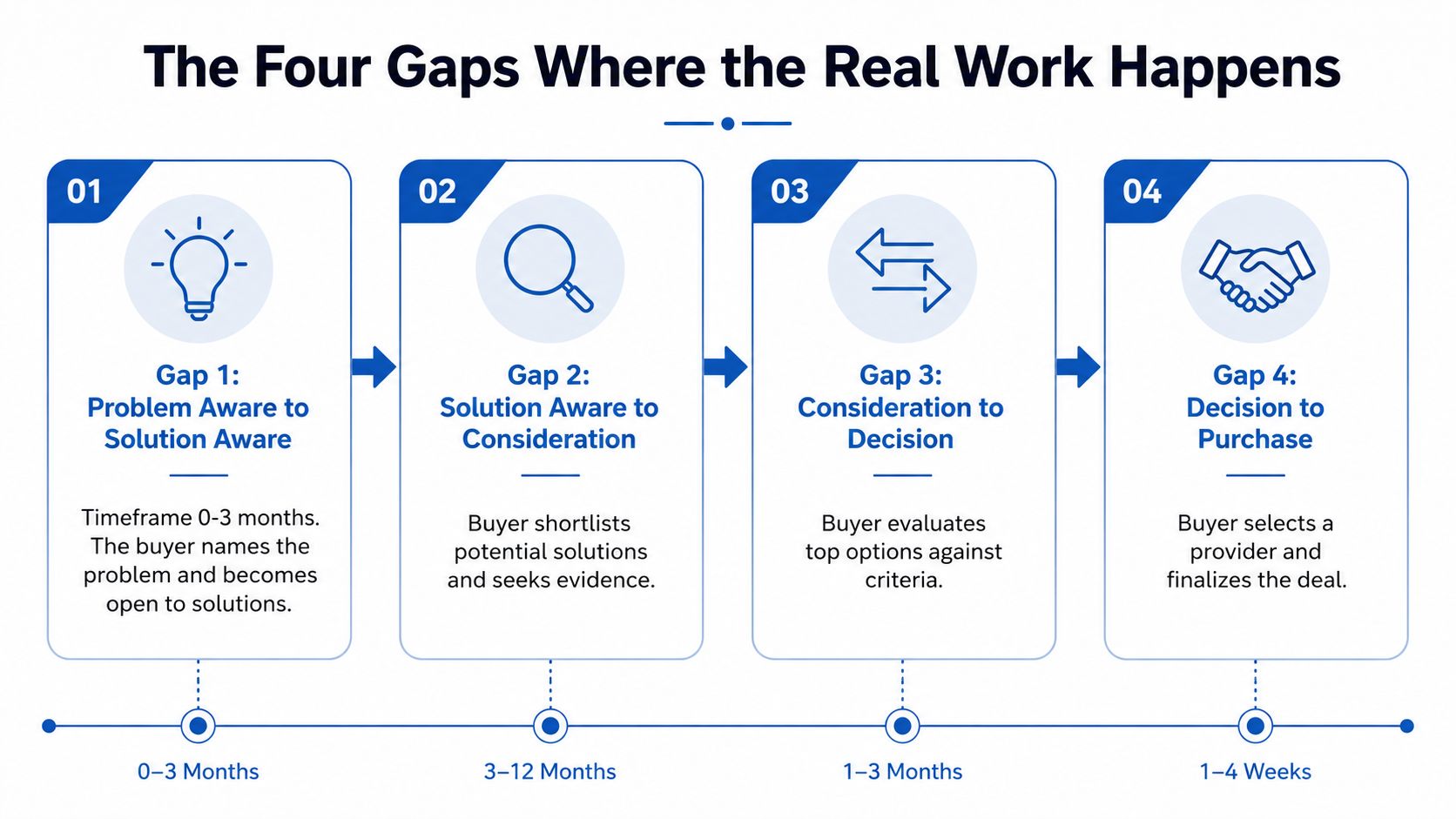
The four handoffs that deserve your attention
1. The first few seconds
A headline, ad, social post, or video opening needs to give somebody a reason to keep going. It doesn’t need to explain everything. It needs a clear premise that feels relevant to a problem they already have or might soon have.
“We help companies grow” does nothing here. A specific claim about a problem your reader recognizes gives them something to react to.
2. The first minute
The landing page has to make the case. What do you do? Who is it for? Why should the reader believe this is different from the other things they’ve already seen? What should they do next?
Most pages fail because they answer those questions with generic language. They say they’re full-service, data-driven, or built for growth. None of that helps a buyer decide whether to keep reading.
3. The working conversation
A demo, discovery call, or sales conversation needs to deliver what the earlier message implied. If the ad promised a sharp diagnosis and the call turns into a generic product tour, you’ve taught the buyer not to trust the next claim.
The best sales conversations make the problem clearer, then show a believable path through it. They don’t dump every feature on the table. If the buyer can’t explain the value to somebody who missed the call, the conversation hasn’t done enough work.
4. The internal decision
After the call, the buyer has work to do without you in the room. They need material they can forward, proof they can repeat, and answers for the people who weren’t on the call. Case studies, comparison pages, implementation details, references, and a clean proposal help here.
That last handoff often gets ignored because it happens outside the CRM until someone comes back with a question. It’s still part of the sale.
Measure the job in front of you
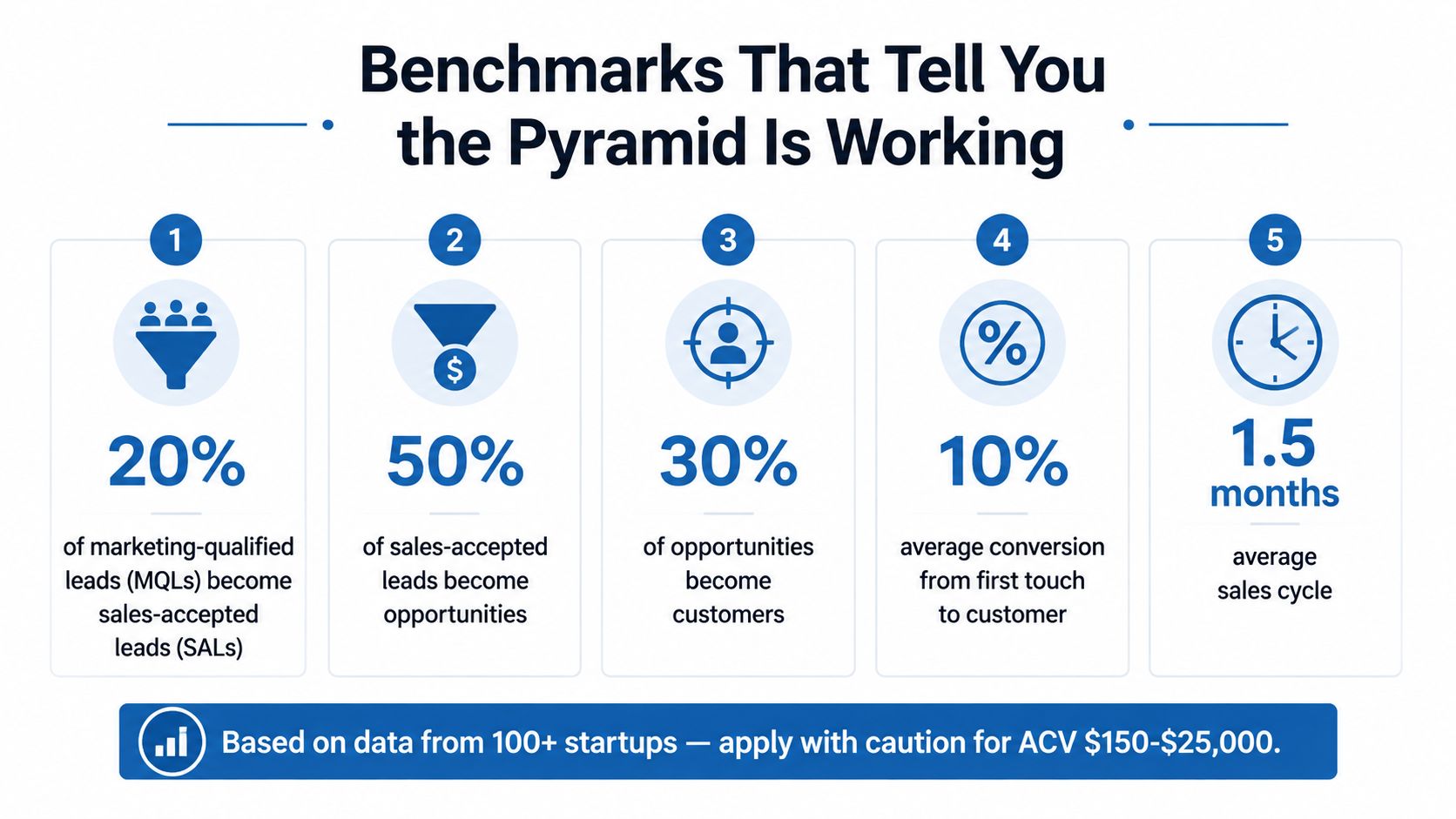
Don’t use one universal benchmark for every company. Deal size, sales cycle, category maturity, and buying group all change the math.
Use numbers as a way to spot where to look. If branded demand is growing but qualified meetings are flat, inspect the landing page and follow-up. If meetings are happening but opportunities don’t move, listen to the calls and read the proposals. If opportunities stall after a technical review, that’s a sales and product-proof issue, not a traffic issue.
You can still track familiar measures: direct traffic, branded search, conversion rate, sales accepted leads, pipeline, close rate, retention, and expansion. The point is to connect each measure to a decision. Otherwise a dashboard becomes a graveyard of numbers that nobody can act on.
If the number can’t tell you what to inspect next, it’s reporting activity rather than helping you run the business.
That’s also why leading indicators matter before revenue shows up. You need earlier signals that a buyer is moving, not a postmortem after the quarter closes.
Build the handoffs before buying more attention
Upper-funnel work matters. Lower-funnel work matters. The argument starts to fall apart when somebody assumes one will automatically do the other’s job.
Before you put more money into reach, look at what happens after somebody pays attention. Before you put more money into capture, ask whether enough of the right people know you exist. Then pick the handoff that’s breaking and fix that one.
That is slower than buying another campaign. It is also how you stop confusing activity with progress.
CrowdTamers helps founders and GTM teams work through this: where buyers lose the thread, what the message needs to say, and what the next dollar should be responsible for. If your channel mix is busy but pipeline is uneven, start with your go-to-market strategy. The missing work is usually sitting between two steps that everybody assumed were connected.